
Modular Office Construction
Not every building is move-in ready, and office space is usually the first gap. Modular office construction fills it: insulated wall panels, roof deck and wiring are built in a factory, shipped to your site and assembled in days instead of months. This guide explains how the system works, where the offices are used and what to think about before you plan one.
If you're ready to size a project, start with Panel Built's modular offices.
What Are Modular Office Buildings?
Modular office buildings are prefabricated office units that can be installed inside or outside of an existing structure. Think of them as flexible, self-contained office systems—similar to prefabricated trailers—but specifically engineered for long-term commercial and industrial use.
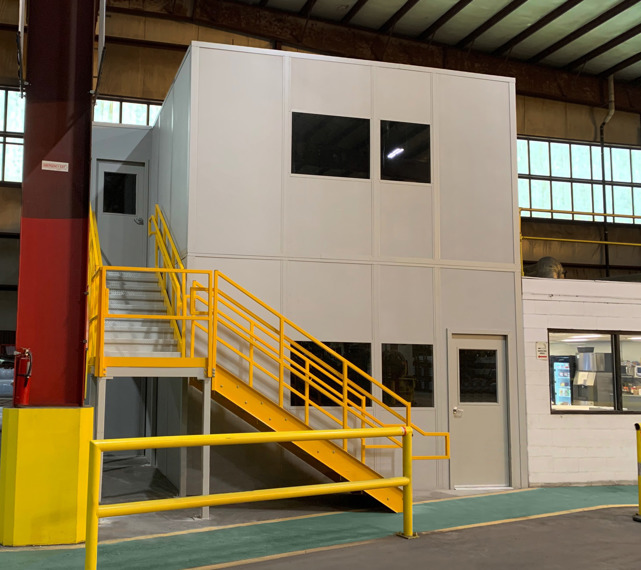
These structures are often rectangular in shape and are designed to be assembled quickly on-site. They can serve as permanent or temporary spaces and are available in single- or multi-room configurations. Modular offices can be placed:
-
Inside large factories or warehouses
-
Outdoors as stand-alone units (e.g., at construction sites)
-
On top of mezzanines to save floor space
-
In parking lots or job sites for temporary setups
Panel Built’s modular office systems are engineered for durability, flexibility, and long-term performance, offering a turnkey solution to companies across industries.

Learn more about Panel Built modular offices or request a free quote.
Benefits of Modular Office Construction
Modular construction has become a go-to solution for businesses that need to expand or reorganize quickly. Here are some of the core advantages:
Fast Installation
Modular offices can be assembled in a fraction of the time it takes for traditional construction—minimizing disruption to your operations.
Cost-Effective
Lower labor costs, minimal downtime, and reduced material waste make modular offices a budget-friendly option.
Portable & Relocatable
Need to rearrange your facility or move to another job site? Modular offices can be disassembled and reinstalled with ease.
Climate Controlled
Offices are fully insulated and compatible with HVAC systems, making them ideal for year-round use in harsh or variable environments.
Flexible Layouts
From break rooms and conference spaces to observation towers and quality control labs, modular buildings are endlessly adaptable.
Built to Last
Panel Built’s systems use heavy-duty materials and can include fire-rated panels, insulated windows, and soundproofing as needed.
Modular vs. Stick-Built Office Construction
The difference is where the work happens. Stick-built offices are framed, drywalled, taped, painted and wired on your floor, one trade at a time. A modular office is manufactured as finished panels with the electrical tracks already in place, so the on-site work is assembly.
-
Time: Panel Built projects typically run 4 to 12 weeks from order to occupancy, with on-site assembly in 1 to 5 days for standard sizes. Stick-built offices of the same size are usually measured in months.
-
Disruption: no drywall dust, paint fumes or framing crews on the production floor. Panels arrive pre-cut and pre-wired.
-
Cost: industry data puts modular offices 20 to 50 percent below site-built construction, mostly from lower labor and less waste.
-
Taxes: modular offices are often classified as equipment rather than real property, which allows faster depreciation than the 39-year schedule for buildings. Confirm with your tax professional.
-
Flexibility: panels unbolt. The office can be expanded, reconfigured or moved to another building. Drywall cannot.
Ready to plan a modular office? Request a quote, or start with the Modular Offices product page to compare options, standard features and typical costs.
Related Reading: What does a Modular Office Cost?